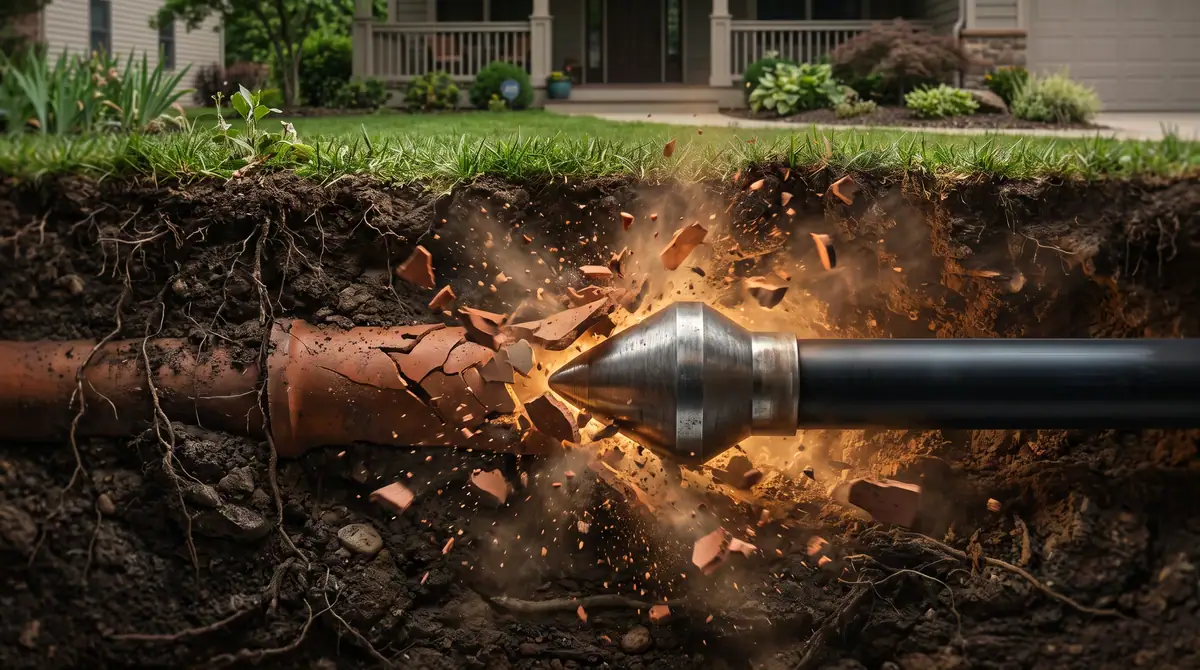
Open-trench repair means digging the whole pipe up. Trenchless repair means working through small access points. Both can be right, and the honest answer depends on what your camera video shows.
What traditional digging involves
A trench is opened along the full line, the old pipe is removed, new pipe is laid and the trench is backfilled. The ground, landscaping and anything on top of the line must be repaired afterward.
What trenchless involves
Lining, bursting, splitting and drilling reach the pipe from one or two small pits. The yard, drive, deck or slab stays largely in place.
When trenchless wins
Long runs, lines under driveways, patios, slabs or mature trees, hillside lots, tight access and busy commercial sites are where trenchless saves the most disruption.
When digging still makes sense
Short runs in open ground, some severe bellies and certain full-line grade corrections can be simpler with a dig. We will say so when that is the case.
How to decide
Start with a camera inspection. Video of the pipe, plus a plain look at what sits above it, answers most of the question in minutes.